By Josh Mason, Founder of Boost Local Biz
A business can have a great-looking website, run ads, get phone calls, and generate inquiries—and still lose opportunities somewhere between “I’m interested” and “You’re booked.”
I’ve spent more than 15 years working in digital marketing and websites, and one thing has become increasingly clear to me:
Getting attention is only part of the job. What happens after someone shows interest matters just as much.
A visitor lands on your website. They fill out a form, start a chat, or call your business. Then what?
Does someone respond quickly? Does the inquiry reach the right person? Is there a clear next step? If the prospect isn’t ready today, does anyone follow up? If they book an appointment, does the rest of the team know?
Those questions are less exciting than a flashy new website or an AI demo. They’re also the questions that shape what we’re building at Boost Local Biz.
A website should do more than look good
I still care about design. A professional website helps people understand your business and decide whether they trust you.
But a website shouldn’t be treated as a finished project the moment it goes live.
For a service business, it can be the starting point of a much larger process. It can help a visitor find the right service, answer common questions, make contact, schedule a conversation, and receive useful follow-up.
That’s what I mean when I talk about an AI-powered website.
I’m not talking about a website that was simply created using AI. I’m talking about what the website can actively do for the business and its customers.
Sometimes that includes an AI chatbot. Sometimes it means a better form, clearer calls to action, online scheduling, or an immediate response when someone reaches out. Often, the real value comes from connecting those pieces rather than adding another standalone feature.
A chatbot that answers questions but leaves the business with no usable record of the conversation is only doing part of the job.
A form that collects a lead but sends it into an inbox nobody checks quickly enough has the same problem.
The website may be working. The process around it isn’t.
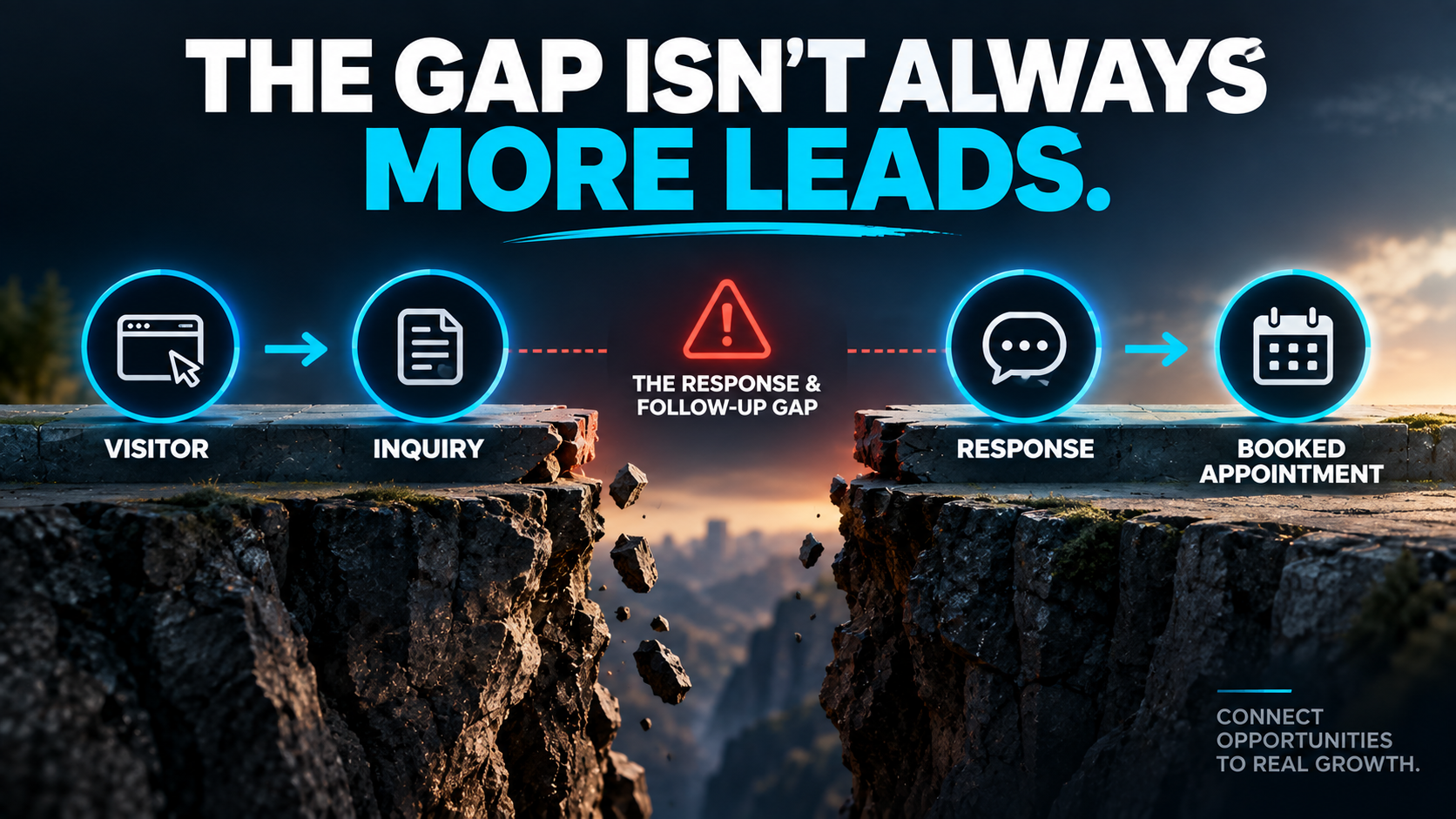
More leads aren’t always the answer
It’s natural to assume that growing a business means generating more traffic, more calls, and more form submissions.
Sometimes that’s exactly what’s needed.
But before spending more money to bring people in, I think it’s worth asking whether the business is making the most of the opportunities already arriving.
If inquiries go unanswered, estimates receive no follow-up, or prospects have to work too hard to book, increasing lead volume can simply send more people into the same broken process.
I’ve written more about that distinction in Why More Leads Aren’t Always the Answer.
It doesn’t mean marketing is unimportant. It means marketing and lead conversion shouldn’t be treated as separate worlds.
The ad, the website, the phone call, the follow-up message, and the appointment are all part of one customer journey—even when different tools or people handle each step.
The missing piece is often the connection between the tools
Local businesses have more technology available to them than ever.
A website platform. A CRM. A scheduling tool. An email platform. Text messaging. An AI chatbot. A phone system. Review requests. Advertising dashboards.
Each may be useful on its own. But owning the tools doesn’t mean they work together.
What interests me is the connection between them.
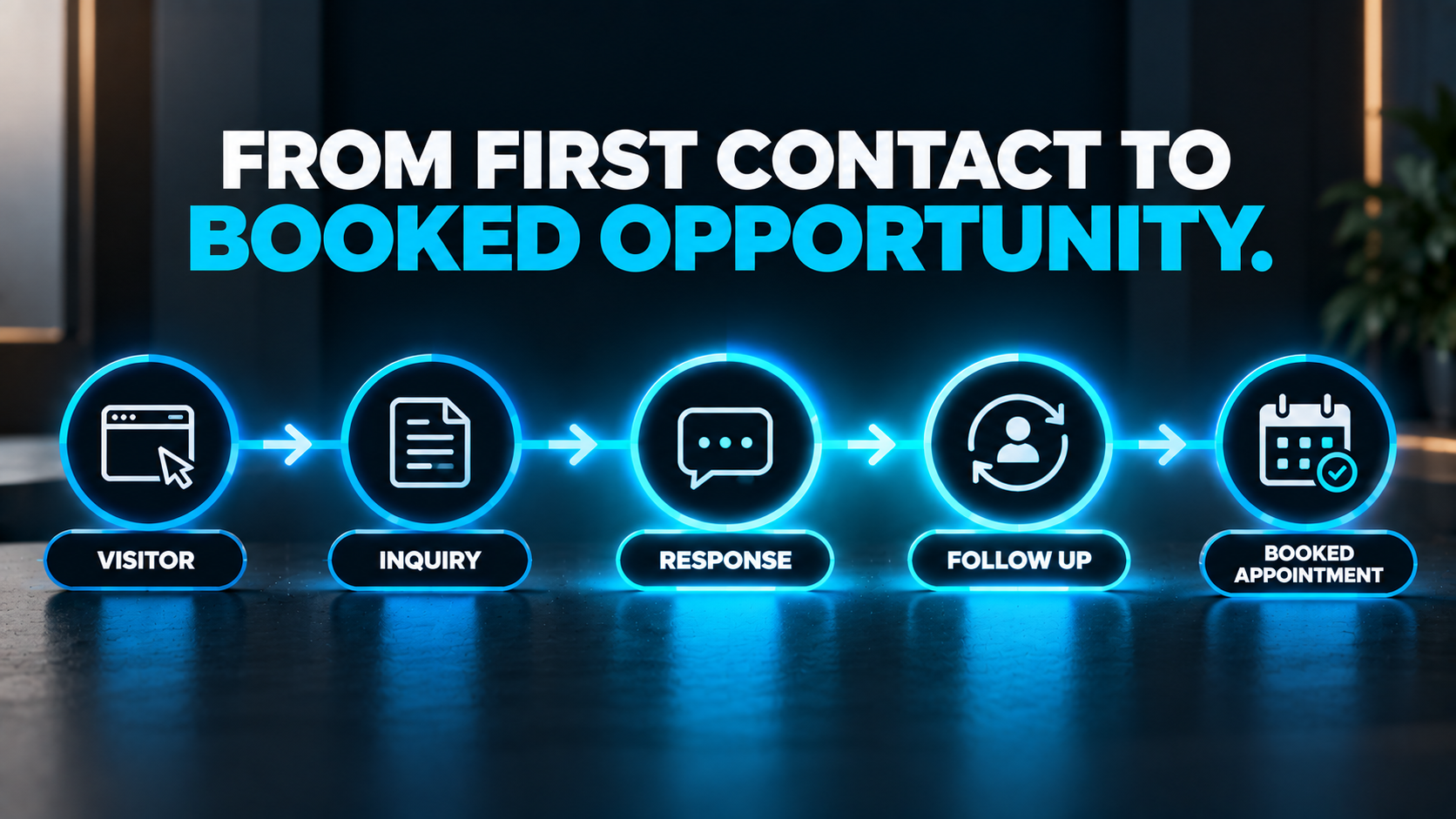
When someone submits an inquiry, the business should know where it came from and what the person needs. The prospect should receive an appropriate response. The team should know who needs attention. Follow-up should happen when it makes sense, and stop or change when the conversation moves forward.
That’s the thinking behind our Booked Calendar System™: connecting lead capture, response, conversations, follow-up, and scheduling so that marketing has a clearer path toward actual business opportunities.
It isn’t about automating every human interaction. It’s about making sure the right interaction happens—and that an interested customer doesn’t get lost because nobody knew what was supposed to happen next.
What this looks like in actual projects
This direction hasn’t come from sitting around imagining what AI might do someday. It has come from building websites and implementing practical business systems.
For Bella Lawn Maintenance, our work has included a new website along with AI chat, forms, automated follow-up, and review-related functionality. The important idea isn’t that the site has AI. It’s that the website and the systems around customer contact are designed to work together.
For Precision Pavers & Pool Design, we’ve worked on a website experience that helps visitors explore options and move toward an inquiry, with information flowing into the business’s follow-up process.
For BCR Construction & Development, the work has included a full website build and systems related to its Google Business Profile and reviews.
These are different businesses with different customers and needs. They shouldn’t receive identical marketing systems just because the same software makes certain features available.
That’s part of the job: understanding the business well enough to decide what should happen, then choosing the technology that helps make it happen.
These examples describe work performed, not claims of measured revenue or conversion improvement.
AI should make the process more useful, not more complicated
I’m excited about what AI can do for small businesses. I also think it’s easy to get distracted by the technology itself.
An AI receptionist sounds impressive. But can it recognize when a caller needs a person? Can it collect the information the team actually needs? Can it help move the conversation toward the right next step?
An AI website chatbot might answer questions at 10 p.m. That’s useful. But what happens when someone wants a quote or an appointment?
Automated follow-up can save time. But if it keeps sending the same message after a customer has already replied, it creates a worse experience.
The goal isn’t to make every interaction artificial. It’s to use automation where it improves responsiveness, consistency, and clarity—and leave room for people where judgment or a personal conversation matters.
AI is a tool for making the business work better. It isn’t the business outcome.
Why we’re building Boost Local Biz this way
I don’t want Boost Local Biz to be a place where a business owner is sold a website, then a chatbot, then a CRM, then another disconnected marketing service.
I want us to look at the larger picture.
What does the customer experience look like before someone contacts the business? What happens when they do? What happens if they don’t book immediately? Where does the owner lack visibility? Which repetitive tasks are worth automating, and which conversations should stay personal?
That’s why our work connects AI-powered websites, lead conversion, CRM, follow-up, scheduling, and practical digital marketing.
It’s also why we’re building a substantial library of articles rather than publishing only service pages.
Some business owners want to understand what makes a service-business website convert. Others need to know how quickly to respond to a new lead, how automated follow-up works, or how to track leads through to booked appointments.
And as the way people discover businesses changes, we’re exploring topics like AI visibility for local businesses—without pretending that anyone has a magic button for getting recommended by an AI search experience.
I want those resources to be useful whether someone works with us or not.
Better marketing should lead somewhere
A good website matters. Good marketing matters. More visibility matters.
But none of those should be the finish line.
The bigger opportunity is to connect the experience: help the right people find a business, make it easy to start a conversation, respond while their interest is fresh, and create a sensible path toward the next step.
That’s the kind of work I want Boost Local Biz to be known for.
Not AI for the sake of AI. Not more tools for the sake of more tools.
Better systems that help local businesses turn more of the opportunities they already have into real conversations, appointments, and customers.
— Josh Mason
Founder, Boost Local Biz
Explore more practical ideas in the Boost Local Biz blog, or learn more about Boost Local Biz and the systems we build for service businesses.